School of Education

School of Education

Transform Young Lives.

Whether you aspire to be an educator, school administrator, or any other classroom-related career, at the University of South Carolina Aiken, we’re passionate about inspiring the next generation of learners and leaders.

Our School of Education prepares you to succeed—and thrive— in classrooms and school districts, helping you to make a difference in the lives of others. Our education programs are recognized as some of the best in South Carolina and beyond. We offer undergraduate education degrees in:

  • Early Childhood Education
  • Elementary Education
  • Middle Level Education (ELA, Social Studies, Mathematics, Science)
  • Music Education
  • Secondary Education (Biology, Chemistry, Mathematics, ELA, Social Studies)
  • Special Education

We also offer a master’s degree in educator leadership that prepares students for leadership roles throughout the field.

No matter your interests, our degrees in education—which are accredited by the Council for the Accreditation of Educator Preparation—will provide you with the knowledge, skills, and classroom experience that sets you up for success.

Department Highlights

Gain the tools and techniques to become a compassionate, competent, and socially conscious teacher who produces change in classrooms and communities in which you live and work. At USCA, our education degrees offer:

  • Experienced K–12 classroom educators. USCA’s education programs have faculty members who have decades of expertise—both here on campus and in shaping the next generation of young minds. They’ll be there to mentor you, answer your questions, and help you find success in any school setting that interests you.
  • Opportunities to get to know your classmates. With more than 90 student clubs and organizations, USCA students who pursue degrees in education frequently get involved with the South Carolina Association for the Education of Young Children, the National Association for Music Education, the ACS Chemistry Club, the History Club, and national honor societies.
  • An affordable way to become an educator. Did you know that USCA offers one of the lowest tuition rates among public schools in Georgia or South Carolina? Our education degrees also offer more than a dozen scholarships to help make your learning even more cost-effective.

Mission Statement

As an integral part of the University of South Carolina Aiken, the School of Education is committed to the university goals of active learning through excellence in teaching, faculty and candidate scholarship, and service. Candidates in the School of Education participate in a rigorous curriculum, which is anchored by a strong liberal arts and sciences component, comprised of courses in the humanities, fine arts, social sciences, mathematics, and natural sciences. These courses provide a foundation upon which the pedagogical content and pedagogy are built, and dispositions such as responsible citizenship, respect for diversity, and cross-cultural understandings are developed. The School of Education faculty model instruction based on research, infused with technology, and aligned with national, state, and local standards. The School of Education collaborates with schools, school districts, and community service organizations to provide numerous and varied field experiences that are structured to prepare candidates to work with all students.

The teacher education faculty in the School of Education challenges candidates to acquire and develop the knowledge, skills, and dispositions necessary to become successful Dynamic Educators who can plan, instruct, manage, communicate, and grow professionally.

Call for Third-Party Comments

The School of Education at University of South Carolina Aiken is hosting an accreditation visit by the Council for the Accreditation of Educator Preparation (CAEP) on March 1-3, 2027. Interested parties are invited to submit third-party comments to the evaluation team. Please note that comments must address substantive matters related to the quality of professional education programs offered and should specify the party’s relationship to the provider (i.e., graduate, present or former faculty member, employer of graduates).

We invite you to submit written testimony to:
CAEP
1140 19th Street NW, Suite 400
Washington, DC 20036
Or by email to: callforcomments@caepnet.org

Vision Statement

As a leading teacher education program in South Carolina, the USCA School of Education prepares highly qualified, dynamic educators who have the knowledge, skills, and dispositions to create optimal learning environments to assist all individuals in reaching their potential.

More Information

For questions or program information, please contact the appropriate coordinator below.

Dr. Macie Kerbs
Early Childhood Education Coordinator
Email Dr. Kerbs

Dr. Michelle Rasheed
Elementary Education Coordinator
Email Dr. Rasheed

Dr. Tim Lintner
Middle Level and Secondary Education Coordinator
Email Dr. Lintner

Dr. Melissa Martin
Special Education Coordinator
Email Dr. Martin

Dr. Charles (Chuck) Wagner
Educational/Teacher Leadership and Graduate Studies Coordinator
EMAIL DR. WAGNER

Department News

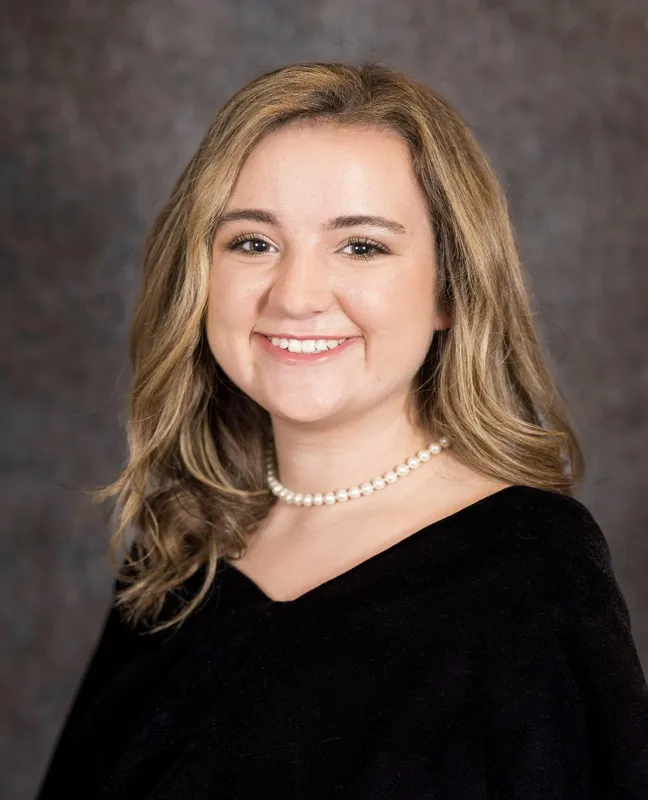
Emma Polewski graduates Dec. 10 from the University of South Carolina Aiken with a degree in early childhood education. Courtesy photo.
November 24, 2026

USCA education major graduates early, ready for classroom

Emma Polewski, a graduating senior at the University of South Carolina Aiken, is preparing to take the lessons she’s learned on campus into local classrooms. Polewski knew from the start that she wanted to study close to her hometown of Aiken. Proximity wasn’t the only thing that led her to USCA, however. As an early childhood education major, she needed an academic home that could help her develop the skills to educate children in the future. “USCA felt like the right place for me to pursue my degree and prepare for my future career,” Polewski said. “I wanted to attend a university where I could grow academically, build meaningful relationships and gain the experience I needed to become a teacher.” At USCA, Polewski sought to learn how to be an educator. At the same time, she learned about herself, coming to understand the importance of diligence, perseverance and commitment to her goals. “Those are values I will carry with me into my career as an educator and hope to instill in my future students.” Polewski chose early childhood education to make a difference in the lives of children. “I believe the early years of education are so important because they help shape a child’s confidence, curiosity and love of learning,” Polewski said. “I want to be the kind of teacher who creates a classroom where every student feels supported, encouraged and capable of succeeding.” Polewski graduates with her bachelor’s degree in early childhood education on Dec. 10, and as she reflects on everything she learned, she recognizes now more than ever the impact that high-quality educators can have on the people they teach — and the impact one professor has had on her. “Dr. Macie Kerbs has been such an important part of my journey at USCA because she has always believed in me, even during times when things felt overwhelming,” Polewski said. “Having someone who believes in you and encourages you to keep going means more than words can explain.” Polewski said she is thankful for Kerbs’ continued support, which has helped her reach her goals and believe in herself. “As I prepare to become a teacher, I hope I can be that same source of encouragement for my future students and make them feel just as supported and believed in as Dr. Kerbs has made me feel,” Polewski said. While studying at USCA, Polewski completed hands-on work through student teaching, learning how to develop lesson plans, manage classrooms, adapt to students’ needs and create an engaging learning environment. “Student teaching has been especially meaningful because it has allowed me to put what I have learned into practice and experience the responsibilities of being an educator,” Polewski said. “Experiences like this have strengthened my passion for teaching and confirmed that education is the career I want to pursue.” Polewski’s experiences at USCA were not limited to the classroom. As a member of the spirit squad, she worked on a team and built lasting friendships. “College has been about so much more than earning a degree,” Polewski said. “It has also been about the relationships, experiences and memories that I will carry with me long after graduation. Being part of the spirit squad made this chapter of my life especially meaningful.” On top of her responsibilities as a student, Polewski had to navigate unique challenges after deciding to pursue her degree at an accelerated pace. She met that challenge head-on by taking summer classes and working ahead when she could. “Balancing that goal with the challenges of college was not always easy, and there were times when I had to advocate for myself, ask questions and work through unexpected obstacles,” Polewski said. “Those experiences taught me perseverance, patience and determination.” Polewski is now graduating after three and a half years instead of the traditional four. “Reaching graduation means so much to me because I know how much hard work went into getting here. I am proud that I stayed committed to my goal and kept pushing forward, even when things did not go exactly as planned,” Polewski said. After graduation, Polewski will work as a building substitute while pursuing her dream of having her own classroom someday. “I am excited to gain more classroom experience, continue developing my teaching skills, and apply what I have learned at USCA. I am leaving USCA with greater confidence in my abilities and excitement about making a difference in the classroom,” she said. “I know I will continue learning and growing throughout my career, but I feel ready to take this next step,” Polewski said. “Looking back, I am proud of how far I have come and grateful that USCA has been such an important part of my journey. “I am also looking forward to getting married and beginning this next chapter of life with my fiancé. I am proud of what I have accomplished and excited for what the future holds.”
Photo of Judy Beck
November 2, 2026

Judy Beck Honored for Distinguished Service to Teacher Education

Dr. Judy Beck, a professor in the University of South Carolina Aiken School of Education, earned the Roy L. Lauter Distinguished Service Award, one of the highest honors given by the Southeastern Regional Association of Teacher Educators.   The award was presented during the annual SRATE Conference on Oct. 15 at the University of Arkansas in Fayetteville.   Named in honor of a longtime SRATE leader and executive director, the award recognizes individuals who have made significant, sustained contributions to teacher education and to SRATE during a period of at least 10 years.   Beck's relationship with SRATE spans more than two decades. She has served in numerous leadership roles, including president of SRATE in 2015, and remains actively involved in supporting the organization and the profession. She currently serves as treasurer of the South Carolina Association of Teacher Educators and has represented SRATE at the national level through the Association of Teacher Educators. She has served as both ATE president and board member.  “Dr. Judy Beck represents the very best professional service to teacher education. Her more than two decades of sustained involvement with SRATE, her leadership within her South Carolina state unit, her representation of SRATE at the national level, her service as SRATE president, and her subsequent leadership within ATE, demonstrate an extraordinary commitment to the profession,” said Valerie Wright of Saint Leo University who nominated Beck and currently serves as the president of the ATE.   “She has built bridges among state, regional, and national organizations, mentored future leaders and consistently placed the advancement of teacher education at the center of her professional service.”  Beck’s nomination for the award emphasized her enduring commitment to mentoring emerging leaders, sharing institutional knowledge and strengthening professional organizations devoted to educator preparation.  “This award is especially meaningful because it comes from colleagues whose dedication to teacher education I deeply respect,” Beck said. “Throughout my career, I have been committed to supporting future educators, mentoring emerging leaders and strengthening the professional organizations that advance our field. I am honored to receive this recognition and grateful for the many opportunities I have had to serve alongside outstanding teacher educators across the United States.”  Beck champions high-quality educator preparation, professional collaboration and leadership development. Her service at the state, regional and national levels has helped strengthen the organizations that support teacher educators and future teachers across the country.  SRATE is a regional professional organization affiliated with the Association of Teacher Educators. Its mission is to improve teacher education through leadership, scholarship and professional collaboration across the southeastern United States.   In addition to SRATE, Beck has been affiliated with and held leadership roles in the World Federation of Associations of Teacher Education, South Carolina Department of Education, South Carolina Collaboration for Effective Educator Development, and the State Higher Education Executive Officers Association. 
Ripp Laborde wearing a Mardi Gras mask and a suit
September 23, 2026

USCA LIFE helps Louisiana student find a college home more than 700 miles away

For Ripp Laborde, college is about more than earning a degree. It’s an opportunity to make friends, become more independent and find a career and a place of his own. For his family, making that dream a reality meant months of research, countless phone calls and a willingness to look beyond their home in Shreveport, Louisiana, for the right opportunity. Their search ultimately led them more than 700 miles away to the University of South Carolina Aiken, where they enrolled Ripp in the USCA LIFE program, which provides students with intellectual disabilities the opportunity to experience college life in a supportive and inclusive environment. “Ripp is our first student to attend the USCA LIFE program so far away,” said Monica Martin, program manager of USCA LIFE. Now in its fourth year on campus, the program has grown to 37 students and is expanding into a four-year program, providing participants with even more opportunities to learn, grow and experience college life. “We are excited to see our program reach other states across the country,” Martin added. Finding the right college fit “When we toured, we were like, it really does feel like home,” said Fran Laborde, Ripp’s mother. “It was perfect. It truly was.” Ripp is part of a blended family with six children. He is the youngest, 13 years younger than his sister, Lizzy Plumlee, who played an important role in helping the family navigate the search for a college program for students with disabilities. Plumlee, who has a doctorate and a background in education, helped the family search for the right program from across the country. One of their primary resources was Think College, a national resource that lists college programs designed to support students with intellectual disabilities. The family quickly discovered that finding the right program would take more than simply finding a college nearby. “Not every program is one size that fits all,” Plumlee said. “They’re all very different. And so, it took a lot of searching to find the one program that was going to be the best fit for Ripp.” While a few schools offered programs similar to USCA LIFE, the family found that many provided academic and social support but did not offer residential assistance. “He needed somebody to guide him in the home setting to help implement it,” Fran said. That was one of the things that made the USCA LIFE program stand out. “Our program is unique because we are a high-support program. This allows students to take risks, learn new skills and explore college life knowing that their resident assistants, teachers and staff are there to back them up,” Martin said. “Our small campus size is appealing to students and families because it makes them feel safe. Students can get from their dorm room to class in less than 10 minutes.” A full support system The university’s comprehensive support system was another important factor for Ripp’s family, providing him with academic, social, and residential resources as he adjusts to college life. They believe the combination of structure and support will allow him to build confidence, develop greater independence, and make the most of his college experience. What stood out most, Fran said, was “the fact that everything is so structured and organized.” She added, “It really is such a multifaceted program in that he will have the supports that he needs for academic, for social, for residential, everything.” The family’s first visit to campus reinforced that feeling. While touring another university, they contacted USCA. Rather than waiting for a formal appointment, the family was welcomed to campus and given a tour. They saw the classrooms, met other students and experienced the campus community firsthand. “They found out that we were in town because we were touring a separate university, and they were like, ‘You’re down? Let us show you,’” Fran said. “It felt like home. It felt like a place where he could be comfortable and safe.” For Ripp, the decision was about more than finding the right support system. It was about having the opportunity to experience college. “I’m excited to make new friends,” Ripp said. “I’m also excited to be taking college classes.” He also brings some unique interests to campus. Challenge Ripp to a trivia game about geography, flags or cultures, and you may have a difficult time keeping up. “If you challenge him in trivia, you will not win,” his mother jokingly said. Ripp also has a fondness for video games, particularly those that allow him to explore new worlds and build creatively. Finding his own path As Ripp begins his college experience, his family hopes the skills he develops will help him reach one of his biggest goals: greater independence. He has often told his family that he wants to one day have an apartment of his own. His family hopes USCA LIFE will help him develop the work and independent-living skills necessary to make that goal possible. “We wanted to get work skills. We wanted to get independent skills,” Fran said. “He expresses to us often that it’s his goal to be able to have his own apartment. And so, we’re hoping that he can get the skills that he needs so that he can do that.” The four-year program will also give Ripp time to explore his interests and discover what he might want to pursue professionally. “I want to figure out what I want to do for a job and all that,” Ripp said. For his family, that opportunity to explore is part of what makes the college experience so meaningful. Social connection was another major factor in their decision. They wanted Ripp to have opportunities to make friends, participate in clubs and activities, and experience the same sense of belonging that other college students have. “We want him to have everything that everybody else does,” Fran said. “So why not college?” Preparing students for what’s next Ripp’s college experience also reflects a larger vision Martin has for the program and its students. As USCA LIFE continues to grow, she hopes that momentum among students and families will help create even more opportunities for inclusion and connection throughout the community. “When our senior students graduate in May, we are excited for them to join the local workforce, get involved in their communities, and lead fulfilling lives. We continue to look for partnerships with local businesses and employers for student jobs during and after their time in the program.” Finding a new home with USCA LIFE Moving to Aiken has been a significant transition for Ripp and his family. Louisiana is home, and the distance means visits require planning. But the family believes the opportunity was well worth it. Their advice to other families considering college programs for students with intellectual disabilities is simple: focus on the student, not the distance. “Look and investigate and choose, not based on location, but what’s the perfect fit for your child,” Fran said. “Everything else will just fall into place.” For Ripp, that perfect fit is now USCA LIFE. As he begins this new chapter, he is ready for what comes next: new friends, new experiences, new skills and the chance to discover what his future might look like. “I’m excited,” he said.
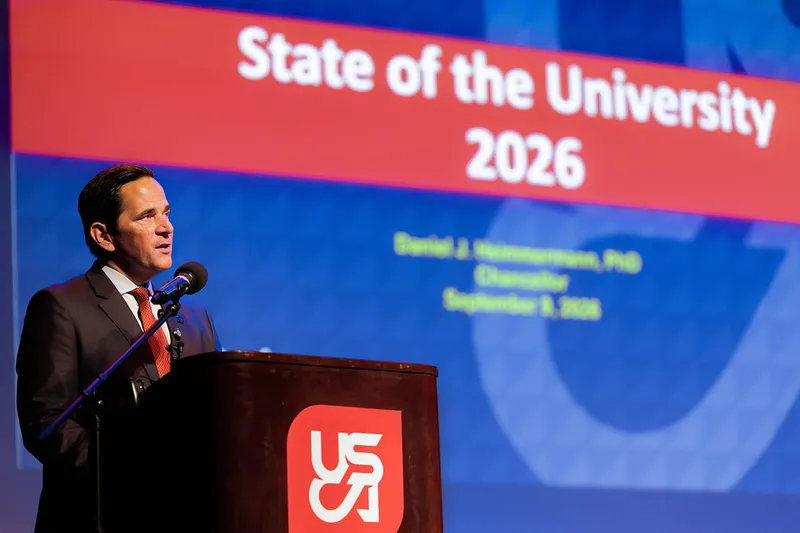
USCA chancellor talks growth and momentum during State of the University Address.
September 18, 2026

Growth and Momentum Take Center Stage in State of the University Address

Sixty-five years after the University of South Carolina Aiken began with a promise to provide educational opportunities that would serve students and strengthen the region, that promise is taking shape on a much larger scale. As USCA celebrates its 65th year, record enrollment, expanded academic programs, significant research investments, new campus facilities and increased community engagement are driving a period of strong growth and momentum. Chancellor Daniel Heimmermann highlighted those accomplishments and more during his annual State of the University Address on Sept. 9. “We are one of the fastest-growing universities in the southeast, a testament to USCA’s widening reputation as a premier regional university,” Heimmermann told the audience at the Etherredge Center on campus. For the third consecutive year, USCA has recorded historic enrollment. Fall 2026 enrollment will exceed 4,500 students, including 3,559 undergraduate and 970 graduate students. Overall enrollment has increased nearly 10% from the previous fall, with undergraduate enrollment growing 8% and graduate enrollment increasing 25%. The university also welcomed its largest freshman class in history, while applications from students outside USCA’s traditional service area increased significantly. Freshman applications increased 47% overall, while applications from students outside the university’s traditional service area increased 81%. USCA ultimately enrolled 43% more students from outside that traditional area this fall. Preparing Pacers for what comes next At the center of USCA’s continued growth is its academic mission. During the past academic year, faculty within the College of Sciences and Engineering developed new bachelor’s programs in cybersecurity and electrical engineering, along with an online master’s program in exercise and sports science with a concentration in strength and conditioning. The School of Business also expanded its offerings, with new MBA specializations in areas including artificial intelligence for business, corporate governance, healthcare operations, human resources operations and project leadership. The university’s bachelor’s programs in Process and Mechanical Engineering earned ABET accreditation, while the School of Business was reaccredited by AACSB, an organization representing the top 6% of business schools and programs. “USCA remains committed to delivering a flexible and relevant curriculum that prepares our graduates to meet South Carolina’s current and future workforce needs,” he said. USCA’s Bachelor of Science in Nursing program, which is celebrating 25 years of preparing graduates for the health care workforce, achieved a 100% pass rate on the National Council Licensure Examination among its December graduates. USCA’s elementary education programs also received a grade of “A” from the National Council on Teacher Quality. More than 320 USCA students completed internships during the past year, with more than 150 employer sponsors. Students gained experience with organizations including Savannah River Site, Savannah River Mission Completion, Savannah River National Laboratory, school districts, health care organizations and other businesses and agencies. Students also gained hands-on experience through undergraduate research and campus-based opportunities. Thirty science and engineering students presented their summer research at the seventh annual Summer Scholar Institute Research Symposium, while biology majors Hayden Driver and Joseph Suazo spent the summer conducting research at Harvard Medical School under the direction of USCA alumna Dr. Connie Arthur. The university’s student-run Regional Security Operations Center also expanded its experiential learning opportunities to students from South Aiken and Aiken High School. These out-of-class learning experiences help students connect their academic preparation with the world beyond USCA, Heimmermann said. Growth that supports student success While more students are choosing USCA, the university is also focused on helping them stay, succeed and graduate. Student retention has increased 11% over the past five years, a result Heimmermann attributed in part to the university’s holistic approach to student support throughout campus, from academic advising and tutoring to coaching and faculty mentorship. The Student Success Center and Gregg-Graniteville Library have expanded collaborative efforts to connect students with the resources they need. Nearly 80% of academically at-risk students who participated in academic coaching improved their cumulative GPA. The Faculty Advisor Academy also continued to grow, offering 50 workshops during the past academic year with 298 attendees. More than 30 faculty members participated in the series. Those efforts are contributing to another important milestone: USCA produced 925 graduates during the past academic year across its certificate, bachelor’s and master’s programs. The university’s commitment to access also remains strong. Tuition rates have remained constant for eight years, while USCA awarded nearly $36 million in federal and state scholarships and more than $1.6 million in private awards to more than 1,000 students during 2025-26. Campus takes shape for the future The transformation happening at USCA is not limited to enrollment and academics. It can be seen across the campus itself. This fall, engineering classes moved into the Advanced Manufacturing Collaborative, giving students access to a facility operated in partnership with SRNL. The Dr. Robert Alexander Student Activities Center received upgrades, including improvements to Starbucks, along with completion of the new Pacer Soccer Field. Construction is also underway on the South Carolina National Guard Readiness Center, which will provide training space for guardsmen as well as conference rooms, classrooms and other spaces for the university. Later this fall, construction is expected to begin on the South Carolina National Guard Cyber Integration Center next to the AMC. There, USCA students and staff will have opportunities to work and learn alongside National Guard personnel. Across campus, nearly $9.5 million was invested in maintenance and improvements during the past year. The university also committed more than $1.2 million to technology upgrades across 41 classrooms and meeting spaces. A new high-performance computing research cluster now gives USCA science and engineering faculty expanded access to computing resources for complex research. USCA’s Facilities Master Plan outlines a vision for a campus that increasingly transitions from a commuter school toward a more residential university, including improved gathering spaces, additional green space, a revitalized quad, new wayfinding signage, additional student housing and plans for an entertainment, restaurant and retail district. More than a university USCA’s influence extends well beyond the boundaries of campus. The university contributes more than $350 million annually to the regional economy and supports nearly 2,800 jobs. It also sits at the center of the emerging Aiken Innovation and STEM Corridor, connecting academic programs and applied research with initiatives such as the AMC and the future South Carolina National Guard Cyber Integration Center. The university’s role in developing the region’s future workforce begins early. The Ruth Patrick Science Education Center welcomes more than 75,000 K-12 students annually through educational events and programs, while the Aiken Scholars Academy continues to provide a pathway for high-achieving students into higher education. USCA also strengthened its regional partnerships this year through the inaugural AI & Cyber Innovation Week, which brought together industry, academia and government to focus on artificial intelligence, cybersecurity, energy and defense. The university also established the USCA Innovation, Economic and Workforce Development Council to help align research, innovation and strategic initiatives with regional economic development priorities. And this summer, the Aiken Energy & Innovation Exchange opened downtown, providing students, educators, industry leaders and community members with access to USCA’s cybersecurity and innovation resources. The university’s impact is equally visible through its cultural and community programs. The Etherredge Center, celebrating its 40th anniversary, welcomed approximately 32,000 people during the past year, a 14% increase over the previous year. Cultural Series ticket sales increased 52%. USCA LIFE also continued to expand opportunities for students with intellectual and developmental disabilities. This year, the program has grown to 37 students and has expanded to include a four-year program. In March, USCA LIFE partnered with the South Carolina Department of Employment and Workforce to host its first employer summit, connecting students with organizations and agencies to explore employment opportunities. One of those students, third-year USCA LIFE student Breyden Anderson, represented Aiken at the 2026 Special Olympics USA Games in Minneapolis, where he earned a bronze medal in tennis. The program also expanded its reach this year by welcoming its first student from more than 700 miles away, Ripp LaBorde, who joined USCA LIFE from Shreveport, Louisiana. A stronger foundation for the future Behind the university’s growth is an equally important investment: the people and partnerships that make USCA possible. The university received $2.55 million in philanthropic support during fiscal year 2026, its strongest fundraising year in five years and a 15% increase over the previous year. More than $1.6 million of that support went toward scholarships for USCA students. USCA’s newest alumni also began a tradition of giving through the inaugural Reins of Legacy giving society, with more than 130 graduating seniors making their first philanthropic gift to the university. State support also played an important role. USCA received more than $1 million in tuition mitigation, $2.5 million for deferred maintenance and $5 million for the Penland Welcome Center renovation. Looking ahead Sixty-five years into its history, USCA is growing in ways its founders could hardly have imagined. What began as a university serving a much smaller student population has evolved into a growing regional institution with more than 4,500 students, expanding academic programs, nationally recognized research and an increasingly visible role in the Aiken community and beyond. “With your continued support, building upon our tremendous legacy and momentum, USCA will continue its responsive and impactful service to its students and our community in fulfillment of its original promise made six and a half decades ago,” Heimmermann said.
USCA Student Government President Lauren Bell holding an award
August 31, 2026

USCA honors top students for academic achievements

Each semester, the University of South Carolina Aiken recognizes students who achieved outstanding grades. USCA celebrates the achievements of these students with the release of its Spring 2026 President's and Dean's Lists. Undergraduate students named to the President's List achieved a perfect 4.0 grade point average while enrolled full-time at USCA. The Dean's List recognizes full-time undergraduate students who earned a 3.5 GPA or higher. "Students who make these lists should be proud of their accomplishments. We celebrate the excellence, dedication and hard work they invested in attaining their academic goals," said Dr. Philip Bridgmon, USCA provost. Students on the President's Honor List are automatically on the Dean's Honor List and will only appear on the President's Honor List.
Approximately 700 freshmen are enrolled for the fall semester.
August 21, 2026

A new class, a new home: USCA welcomes record-breaking Class of 2030 

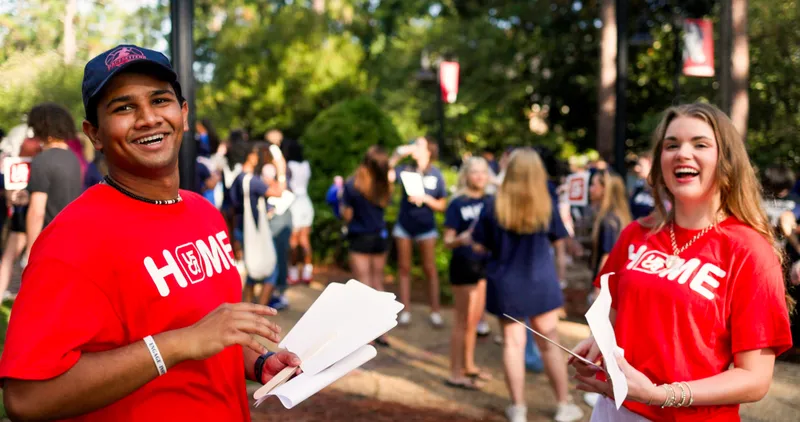
A record number of freshmen began their college careers at the University of South Carolina Aiken for the 2026-27 academic year, marking another year of significant enrollment growth for the university. Approximately 700 freshmen are enrolled for the fall semester, an 18 percent increase from last year’s freshman class.  In addition to its freshman enrollment, the university reported 442 registered transfer students.   “This record-breaking class is a strong signal that families across South Carolina and beyond understand USCA delivers a high value, personal college experience that prepares students for real careers,” said Nathan Rice, vice chancellor of enrollment management and marketing.   Rice added that this year's growth is the result of a campus-wide effort, with admissions, financial aid, and marketing each playing an important role. “The team’s consistency and follow-through helped turn the great work happening on this campus into applications and enrollments.”  The university officially welcomed the Class of 2030 during its annual Freshman Convocation on Aug. 17. Students gathered in the Quad before taking the traditional walk across the bridge to the Convocation Center, where faculty and staff formally welcomed them to the USCA community.  This year’s convocation theme centered around “Home,” encouraging students to think about how they will build their own sense of belonging and community during their time at USCA.  The theme resonated closely with Dr. Brianne Coulombe, an associate professor in the Department of Psychology, who served as one of the event’s guest speakers.  Coulombe shared words of encouragement with the new Pacers, comparing their academic plans to a blueprint for their college experience.  “Sitting here today, you have the blueprint for building a home at USCA that is functional and uniquely yours,” she said. “If you forget, just look back at the major map you got from advising and you’ll see all your general education requirements, your cognate, and specific classes you need for your major. But that’s all it is. A blueprint. Your job now is to make that blueprint into a home.”  For Laura Nolasco-Gonzalez, joining the Pacer community means beginning her college journey close to home while pursuing a degree in Nursing.  Nolasco-Gonzalez, who joins USCA from Johnston, SC, said the university’s location and nursing program were among the top reasons she chose to come to Aiken.   “I chose USCA because it is close to home, it has a great nursing program, and USCA's pride in helping students develop as they adapt to a new environment,” she said.  Nolasco-Gonzalez says she’s thankful to several campus organizations for helping guide her decision to choose USCA, including the Delight ministry, Hispanic Student Association and Project Pacer.   Project Pacer is an extended orientation experience designed to help incoming students build connections, develop a sense of belonging, and feel more comfortable as they transition into college.  “The most exciting part about the start of the school year for me is being able to attend school knowing so many faces. I attended Project Pacer, Leadership Retreat, and I got the opportunity to shadow a pacesetter. These events gave me a head start in this new journey to meet new people and begin to make USCA feel like my new home.”  Rice emphasized that the Class of 2030 shows USCA’s momentum is continuing to build.  “Students are choosing us because they want personal attention and a clear path to career success. A larger class means more energy on campus and more students who will go on to represent USCA well after they graduate.”  The Class of 2030 also reflects a range of backgrounds, interests, and experiences, with students arriving from across the country and around the world.  Among the highlights of this year’s freshman class:  17 states are represented among the freshman class.  15 nationalities are represented.  89% of students are from South Carolina.  32 students speak at least two languages.  The top three majors are Nursing, Mechanical Engineering and Biology.  33 students entered USCA undecided on their major.  Madison is the most popular first name among female students, with nine students sharing the name.  William is the most popular first name among male students, with six students sharing the name. 
92+%

Certification exams pass rates for education degree students.

~100%

Employment offers from partner school districts for our degrees in education.